CNSL: A Renewable Resource Supporting the Transition to Low-Carbon Materials
Published: March 2026
As industries worldwide accelerate the transition toward sustainable production, renewable raw materials are becoming increasingly important. Cashew Nut Shell Liquid (CNSL), a natural by-product of the cashew processing industry, has attracted growing attention as a promising feedstock for low-carbon chemical materials.
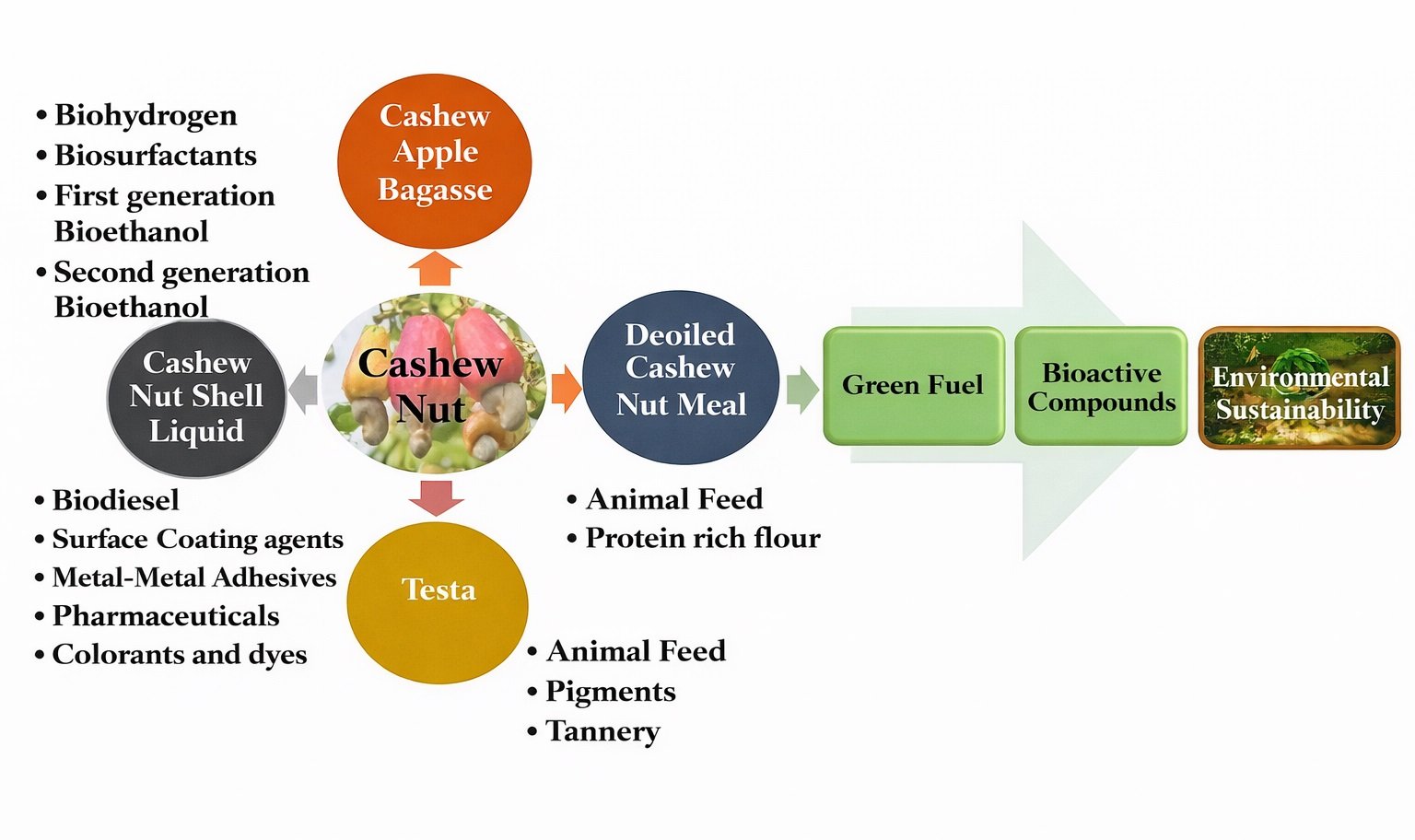
CNSL is obtained from the shell of cashew nuts, which are widely produced in tropical countries such as Vietnam, India, and Brazil. Instead of being discarded as agricultural waste, the shells can be processed to extract CNSL, a phenolic oil rich in valuable compounds including cardanol, cardol, and anacardic acid. These compounds provide a versatile platform for the synthesis of a wide range of industrial chemicals.
One of the key advantages of CNSL-derived materials is their potential to reduce reliance on petroleum-based feedstocks. Cardanol, the main component obtained from CNSL after thermal processing, contains both an aromatic ring and a long aliphatic side chain. This unique structure allows it to be used in the production of bio-based polymers, coatings, epoxy resins, friction materials, and adhesives.
Researchers have highlighted that incorporating cardanol into polymer systems can improve flexibility, chemical resistance, and hydrophobic properties while maintaining good thermal stability. At the same time, using renewable feedstocks such as CNSL helps reduce the overall environmental footprint of chemical manufacturing.
The growing interest in sustainable materials has also encouraged further research into advanced applications of CNSL derivatives, including bio-based surfactants, specialty coatings, and high-performance resins. As global industries continue to seek greener alternatives, CNSL is increasingly recognized as a strategic renewable resource that transforms agricultural by-products into valuable industrial materials.
With abundant cashew production in many regions, the utilization of CNSL not only supports sustainable chemistry but also contributes to the circular economy by adding value to agricultural residues.
Sources
- Chemical Valorization of Cashew Nut Shell Waste – PubMed
- Cashew nut shell: a potential bio-resource for bio-sourced chemicals – RSC Publishing
- Valorization of Cashew Nut Processing Residues – ScienceDirect
- Advances in Nanomaterials Based on CNSL – MDPI