Bio-Based Polymers from Cashew Nut Shell Liquid Gain Attention
Published: March 2026
Cashew Nut Shell Liquid (CNSL), a renewable by-product of the cashew processing industry, is gaining increasing attention as a sustainable raw material for the chemical industry.
Recent research highlights the growing potential of CNSL derivatives in the development of bio-based polymers. Cardanol-based epoxy resins, for example, have shown promising mechanical performance while reducing reliance on petroleum-derived chemicals. Studies indicate that epoxy systems incorporating bio-based cardanol components can maintain comparable tensile properties and suitable thermal behavior for industrial applications such as automotive materials and coatings.
Another line of research demonstrates that compounds derived from CNSL, such as cardol, can serve as key building blocks for synthesizing epoxy resins and other polymer materials. Due to their phenolic structure and reactive functional groups, these compounds enable the production of low-viscosity epoxy resins that are easier to process and can potentially replace traditional petrochemical phenols in certain formulations.
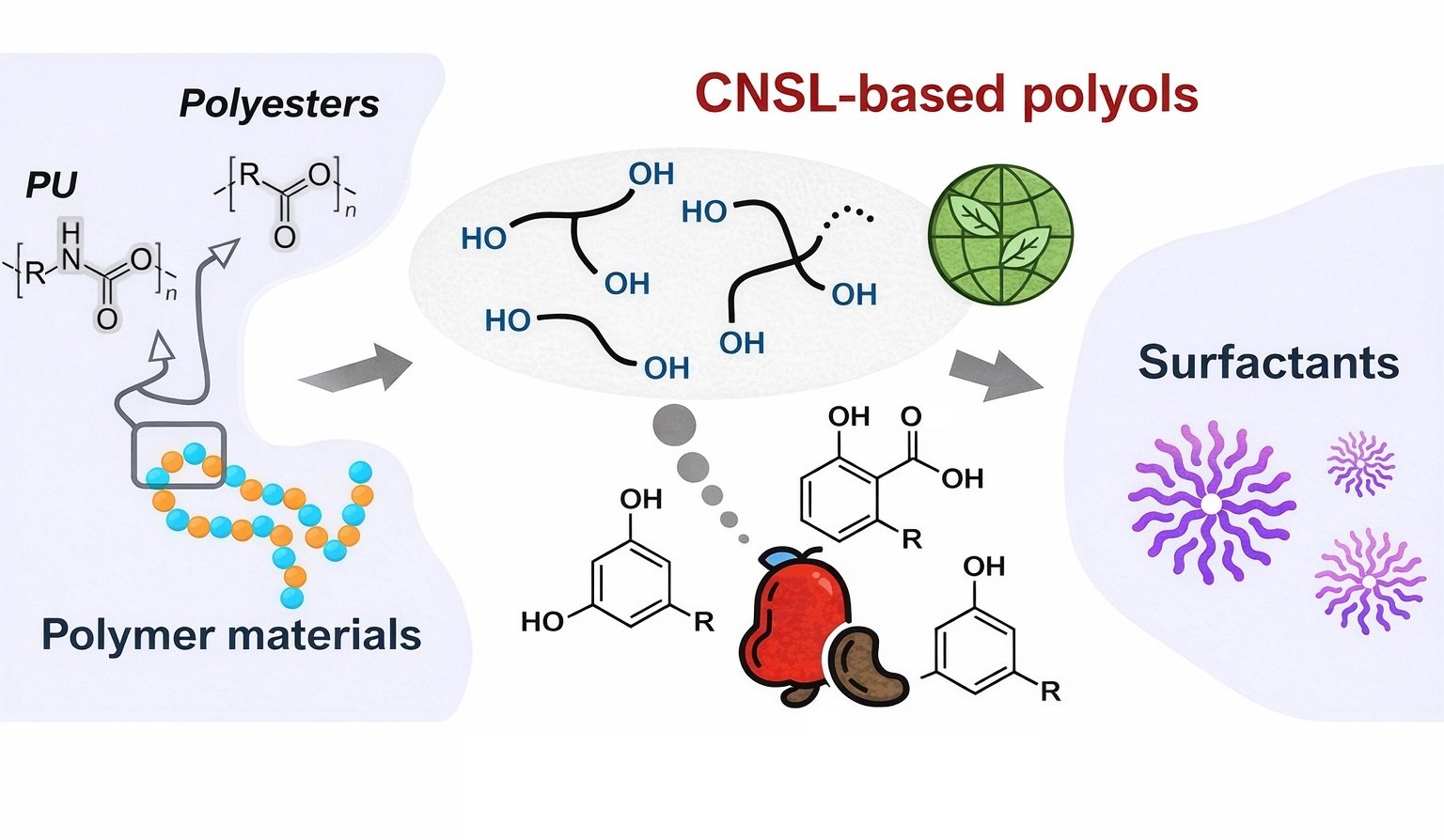
Beyond epoxy resins, researchers are also exploring CNSL derivatives for polyurethane, polyesters, and other advanced polymer systems. The unique combination of an aromatic ring and a long unsaturated hydrocarbon chain in cardanol provides flexibility, hydrophobicity, and chemical reactivity, making it a valuable renewable feedstock for next-generation materials.
With growing global interest in sustainable chemistry and bio-based materials, cashew nut shell liquid is increasingly viewed as a strategic resource that can contribute to reducing dependence on fossil-based chemicals while adding value to agricultural by-products.
Sources
- Polyols from cashew nut shell liquid (CNSL) – RSC Publishing
- Cardol: Cashew nut shell liquid (CNSL) – ScienceDirect
- Mechanical Characterization of Cardanol Bio-Based Epoxy Resin Blends – MDPI